Connection between Mobile POS and ERP for field sales.
Integrate your mobile POS with your ERP to revolutionize field sales. Access real-time inventory, speed up billing, and eliminate errors. Discover 7 key benefits to sell more and better with this tech strategy.
 Patricia Fernández·
10 dic 2025·
5 min
Patricia Fernández·
10 dic 2025·
5 min
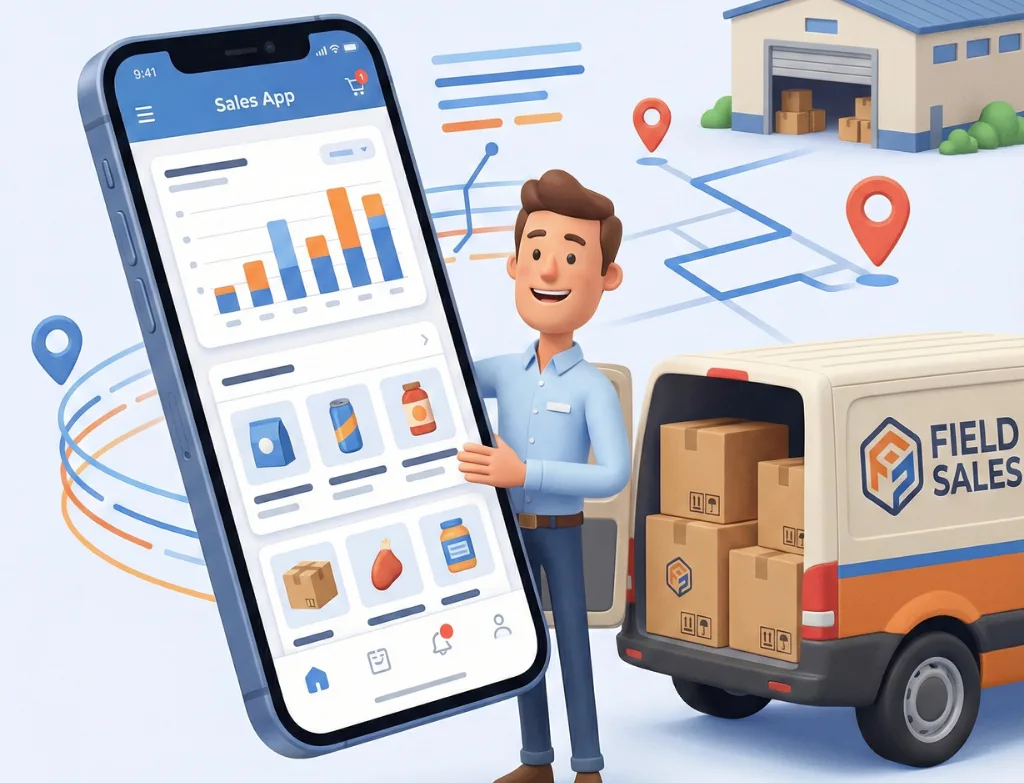
In the dynamic world of field sales, agility and precision are not a luxury, but a necessity. Commercial teams visiting clients, participating in trade shows, or managing delivery routes face a constant challenge: closing sales on the spot while simultaneously keeping information synchronized with the rest of the company. The result of failing to do so? Inventory errors, billing delays, and, in the worst case, dissatisfied customers.
Fortunately, technology offers a robust and increasingly accessible solution for businesses: the connection between a mobile Point of Sale (POS) system and Enterprise Resource Planning (ERP) software. This integration is not just an operational improvement; it is a strategic transformation that empowers your sales team with the tools necessary to sell more and better, no matter where they are.
In this article, we will explore the seven key benefits of linking these two powerful tools and how this synergy can take your field operations to the next level.
1. Real-time updated inventory: sell with confidence
The scenario is classic: a salesperson closes a major sale for an "available" product, only to discover later that the inventory in the central warehouse had already been depleted by an online sale. This type of error not only generates a bad experience for the customer but also creates internal friction and distrust in the data.
By connecting a mobile POS with your ERP, every sale made in the field automatically updates the central inventory.
- Total visibility: Your sales team can check the real availability of products from their smartphone or tablet before confirming an order.
- Reduction of errors: Discrepancies between what is sold on the street and what is recorded in the office are eliminated, preventing sales of "phantom stock".
- Informed decision making: Salespeople can offer alternatives or complementary products based on actual stock, improving cross-selling opportunities.
2. Agility in the ordering and billing process
The time between the customer's "yes, I want it" and the issuance of the official invoice can be full of bottlenecks: manual notes, lost emails, and double data entry in the office.
The POS-ERP integration automates this flow completely. When a salesperson closes a sale on their mobile device, the order information travels instantly to the ERP. This triggers automatic actions, such as:
- Order generation: The order is created in the central system without anyone needing to transcribe it.
- Immediate invoicing: Depending on the configuration, the ERP can generate the invoice and email it to the customer in a matter of minutes.
- Warehouse preparation: The logistics team receives the notification to begin preparing the shipment almost instantly.
3. Centralization of customer information
A field salesperson does not just sell; they also collect valuable information: new contacts, changes in customer needs, purchase history, and preferences. Without a centralized tool, this data stays in notebooks or in the salesperson's memory.
With an integrated system, every transaction or interaction recorded in the mobile POS feeds the ERP database. This enriches each customer's profile, allowing the entire organization (marketing, support, administration) to have a 360-degree view. Soon, tools like an integrated CRM will further empower this capability, allowing for detailed tracking of every sales opportunity.
4. Reduction of administrative burden and human error
Double data entry is not only slow but is also the main source of human errors. A typo in a number, an incorrect SKU, or a wrongly applied discount can generate problems in billing, inventory, and accounting.
The automation provided by the connection between the mobile POS and the ERP eliminates the need for administrative staff to transcribe orders made in the field. This frees up valuable time that can be dedicated to high-impact tasks, such as financial analysis or customer service, rather than error correction.
5. Flexibility in payment methods
Modern mobile POS systems are equipped to accept a wide variety of payment methods: credit/debit cards, transfers, digital wallets, and cash. Being connected to the ERP, every payment is recorded and automatically reconciled with the corresponding invoice in the accounting system.
This not only makes life easier for the customer but also greatly simplifies bank reconciliation and the accounting close for your finance team.
6. Improvement in route planning and sales strategies
With field sales data flowing directly to the ERP, managers and commercial directors gain a clear, real-time view of performance by salesperson, route, or region.
This information allows you to:
- Optimize routes: Identify which geographic zones are more profitable and allocate resources more effectively.
- Analyze product performance: Discover which products sell best in certain areas or by certain salespeople.
- Customize offers: Create promotions or packages specifically based on the purchasing behavior of customers on a specific route.
Tools like ERPXtender allow you to take this analytics further, generating automated reports on platforms like Excel or Power BI to visualize trends and make decisions based on solid data.
7. Professionalization of your company's image
Customer perception is fundamental. A salesperson who manages the entire sales process from a tablet or smartphone, who can confirm stock in the moment, process payment, and send a digital invoice instantly, projects an image of efficiency, modernity, and trust.
This level of professionalism differentiates your company from the competition that still relies on printed catalogs and paper order pads. It is a tangible demonstration that your business is at the technological forefront and cares about offering a fluid and friction-free customer experience.
Conclusion
The connection between a mobile POS and an ERP system is much more than a simple technical convenience. It is a fundamental pillar for companies seeking to build a true omnichannel strategy, where the customer experience is coherent and unified, regardless of whether the sale takes place in a physical store, on an e-commerce portal like WooCommerce, or face-to-face with a salesperson in the field.
Empowering your commercial team with integrated tools not only optimizes your internal operations but also turns them into true ambassadors of an efficient and customer-centric brand. If your salespeople still depend on manual processes, it is time to consider how the synergy between a mobile POS and your ERP can unlock their true potential and take your sales to new horizons.