The Integration Challenge: Why the Operational Lag Between eCommerce and ERP Stifles Business Growth
Analyze the impact of operational lag between ERP and eCommerce. Discover how technical data integration prevents customer loss, optimizes inventory, and enables real-time administrative management for growing businesses.
 Patricia Fernández·
24 Mar 2026·
10 min
Patricia Fernández·
24 Mar 2026·
10 min
Selling online is no longer an innovative option; it is the market standard. However, a technical barrier exists that separates companies that simply "have a website" from those operating a scalable digital sales structure. That barrier is the lack of integration.
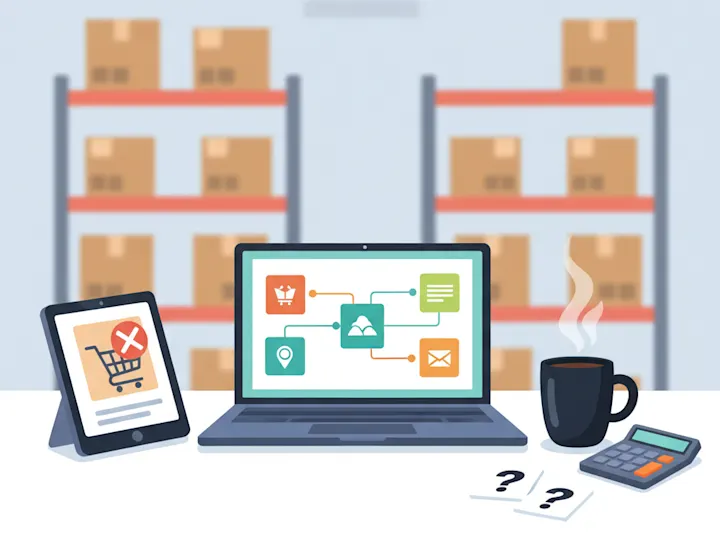
It is common to observe a draining dynamic within administrative teams: employees navigating between multiple tabs, downloading sales reports from one site to manually enter them into the management system, or facing the crisis of canceling orders because the inventory that appeared available online was sold physically at a branch just minutes before.
This phenomenon of operational lag is the primary obstacle for companies seeking to scale. The problem is rarely a lack of demand, but rather an internal structure that fails to process sales success with the necessary speed. This is where specialized solutions like ERPXtender become indispensable to bridge the gap between sales and operations.
The Trap of Recurring Manual Processes
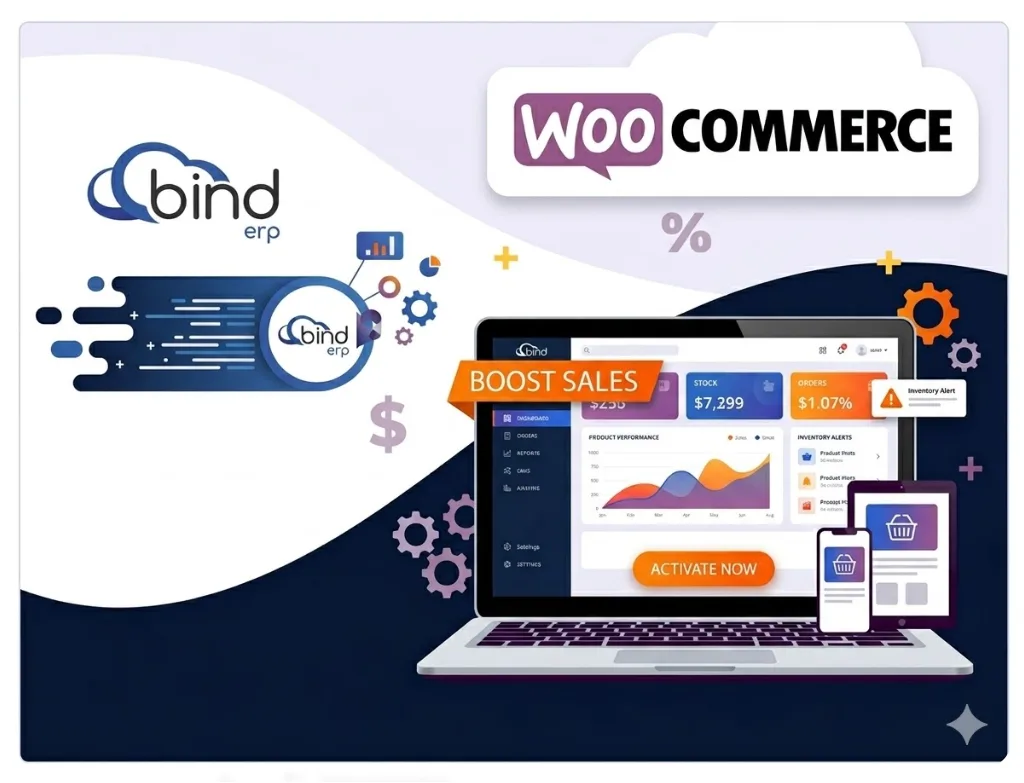
Many organizations operate under a false perception of digitalization. They utilize top-tier tools, such as Bind ERP for administration and Woocommerce for sales, yet the communication between the two depends entirely on constant human intervention.
When stock updates or invoice capturing are subject to someone "having the time" to do it, significant financial and operational risks are assumed. Human error ceases to be an exception and becomes a hidden fixed cost.
A disconnected system generates three critical points of loss:
- Wasted Talent: The opportunity cost of having trained personnel performing data entry tasks that generate no strategic value.
- Erosion of Customer Trust: In eCommerce, precision is the foundation of loyalty. An "out of stock" email sent after a confirmed payment is a lost sale and a customer who is unlikely to return.
- Financial Blindness: If eCommerce sales are not reflected instantly in the ERP’s cash flow, financial reports remain incomplete, making data-driven decision-making difficult.
The ERP as the Central Hub of Information
It is essential to recognize the value of existing administrative infrastructure. Bind ERP is a platform designed to bring order to accounting and operational control; it is where the official company information resides: costs, taxes, suppliers, and warehouses.
However, the eCommerce environment evolves at a different frequency. While an ERP prioritizes control and compliance, an online store focuses on conversion and user experience. Attempting to make one tool fulfill the function of the other usually results in an inefficient operation.
The optimal solution is not to replace the management software, but to strengthen it. Integration should be understood as an extension of the ERP's capabilities. Tools like the ERPXtender connector allow information to flow seamlessly toward digital sales channels, acting as a nervous system that communicates both worlds in milliseconds.
The Technical Importance of Inventory Synchronization
In a professional integration, the management system must act as the Master Warehouse. This means that any movement of goods—purchases from suppliers, returns, or over-the-counter sales—is recorded in the central database and immediately communicated to the digital storefront.
Thanks to ERPXtender technology, a synchronized operation allows for a flawless workflow:
- Instant Updates: New inventory entries are recorded in the ERP and reflected on the web automatically, eliminating manual catalog updates.
- Automated Reservations: Nighttime customer purchases generate sales orders in the system instantly, reserving stock so it isn't sold physically the next morning.
- Margin Protection: Price changes due to cost adjustments are updated across all channels simultaneously, ensuring the online store always operates with current pricing.
This level of operational precision allows for more optimized inventory management, freeing up working capital that was previously tied up due to a lack of certainty regarding real stock levels.
Conclusion: Investing in the Business Backbone
Unlike marketing campaigns, investment in digital infrastructure and connectivity is not always visible to the end customer, but it is what determines if a company can double its sales volume without administratively collapsing.
Real efficiency consists of offering the same information and quality of service across all touchpoints. By expanding the management system's capabilities through ERPXtender, brand reputation is protected, and business growth is ensured to be sustainable and orderly.
At the end of the day, technological tools should solve problems, not create them. If the flow of information between sales and administration continues to be a source of stress, it is time to evaluate if the company's digital architecture is ready for the next level of competition.